
Standard First Aid Course Singapore: What You Learn, Who Needs It, and How to Choose
Most people don’t realise how unprepared they are until they are forced into a situation where someone is injured and waiting for help is not an option.
In Singapore, emergency services are efficient, but response time still depends on location, traffic, and situation complexity. Those first few minutes are often handled by whoever is nearby. Not always a trained professional.
A standard first aid course exists to close that gap. It equips ordinary individuals with structured, practical skills to stabilise a situation before medical help arrives.
And increasingly, it is no longer viewed as optional.
What Is a Standard First Aid Course?
A standard first aid course in Singapore is a structured training programme that teaches individuals how to respond to common medical emergencies using recognised protocols.
It typically includes:
Cardiopulmonary Resuscitation (CPR)
Automated External Defibrillator (AED) use
Wound and bleeding control
Fracture and injury management
Handling medical emergencies such as stroke or cardiac arrest
According to the Singapore Resuscitation and First Aid Council, first aid training in Singapore must follow updated clinical guidelines to ensure consistency and safety in emergency response.
That point is often overlooked. Not all training is equal. Accreditation matters.
Basic vs Standard vs Occupational First Aid
This is one of the most common decision points, and it is often misunderstood.
Feature | Basic First Aid | Standard First Aid | Occupational First Aid |
Depth of Training | Introductory | Intermediate | Advanced |
Hands-on Practice | Minimal | Moderate to High | Extensive |
Workplace Relevance | Low | Moderate | High (mandatory in some roles) |
Certification | Usually non-certifiable | Certifiable | Certifiable (MOM-aligned) |
Duration | Few hours | 12–16 hours | 17.5–23.5 hours |
Best For | General awareness | Public, coaches, office staff | Workplace first aiders |
If your goal is practical competence with recognised certification, standard first aid is typically the most balanced option.
Why First Aid Training Is No Longer Optional
There is a tendency to assume that emergencies are rare. They are not.
Workplace and community safety reports in Singapore consistently show that minor injuries and sudden medical events occur far more frequently than expected. What changes outcomes is not the incident itself, but how quickly and correctly someone responds.
“In most office settings, response delays are the biggest issue, not lack of tools.”
AEDs are widely installed. First aid kits are available. But without training, they are often underused or used incorrectly.
That is where standard first aid training becomes practical rather than theoretical.
What You Actually Learn
Course outlines often look straightforward, but the learning experience is more layered than expected.
You are not just taught what to do. You are placed in situations where you have to decide what to do first.
That difference becomes obvious during training.
Emergency Assessment: You learn how to approach a scene safely, identify risks, and prioritise actions. Many untrained individuals instinctively rush in, which can worsen outcomes.
CPR and AED Application: This is where technique matters. Compression depth, rhythm, and timing are assessed closely. Singapore has significantly increased AED accessibility in public spaces, but according to safety trainers, incorrect usage is still common among untrained individuals.
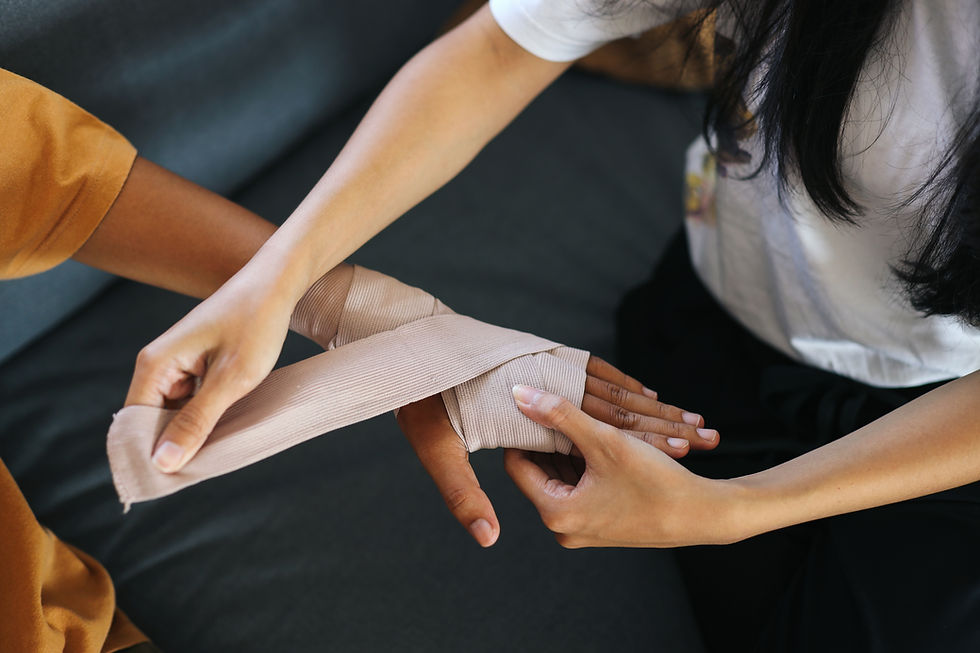
Bleeding and Wound Care: From minor injuries to heavy bleeding, the focus is on control and preventing escalation.
Fractures and Immobilisation: Handling injuries incorrectly can lead to long-term damage. The course emphasises stabilisation rather than movement.
Medical Emergencies: You are trained to recognise early signs of stroke, heart attack, and shock. Recognition alone can change response time significantly.

Real-Life Scenario: Workplace Incident
An employee collapses in an office pantry.
There is an AED mounted on the wall. A first aid kit is within reach. Five colleagues are present.
No one moves immediately.
Someone checks for a pulse incorrectly. Another attempts to call for help but struggles to explain the situation clearly. By the time CPR begins, valuable minutes are lost.
This is not uncommon.
Now compare that with a trained individual:
They assess responsiveness within seconds, call for assistance, initiate CPR correctly, and instruct someone else to retrieve the AED.
The difference is not equipment. It is training.
Real-Life Scenario: Childcare Emergency
A child begins choking during a meal.
Untrained reaction often involves panic or incorrect techniques like excessive back patting without positioning.
A trained individual:
Recognises airway obstruction immediately
Applies appropriate choking relief techniques
Monitors recovery and escalation signs
In childcare settings, even a short delay can lead to serious complications. This is why many caregivers opt for structured training rather than relying on instinct.
Standard First Aid Refresher
Skills degrade faster than expected.
Many participants returning for a standard first aid refresher course realise that their technique has drifted, especially in CPR.
Moreover, guidelines also evolve. Compression ratios, AED protocols, and response frameworks are periodically updated.
A refresher is not just about renewing a certificate. It recalibrates your response accuracy.
Who Should Take The Standard First Aid Course?
Some decisions are clearer when framed by real roles:
Best course for office employees: Standard First Aid provides sufficient coverage for low-risk environments without unnecessary complexity.
Best course for coaches and fitness trainers: Standard First Aid is often expected, as injuries and medical events can occur during physical activity.
Best course for workplace-appointed first aiders: Occupational First Aid may be required depending on risk level and regulatory obligations under the Ministry of Manpower.
Best course for parents and caregivers: Standard First Aid, sometimes combined with Child First Aid, offers practical preparedness.
How Much Does a Standard First Aid Course Cost in Singapore?
Pricing varies depending on provider, accreditation, and course inclusions.
Typical range:
Standard First Aid Course: SGD 120 to SGD 250
Refresher Course: SGD 130 to SGD 300
Subsidies such as SkillsFuture may apply for eligible participants, depending on current policies.
Lower pricing is not always better. Courses with insufficient hands-on practice often fall short where it matters.
Choosing the Right Training Provider
This is where many people underestimate the difference.
A provider should not just issue certificates. They should build competence.
Look for:
Alignment with recognised standards such as SRFAC
Strong practical assessment component
Reasonable class sizes for hands-on learning
Instructors with real-world experience
A course that feels rushed or overly simplified usually signals limited training depth.
Final Thoughts
Training without preparation is incomplete.
A standard first aid kit should be accessible in your environment, whether at home or work. But more importantly, you should know how to use it confidently.
Preparedness is not theoretical. It is operational.
There is a quiet assumption that first aid can be learned “when needed.”
That approach rarely works.
Emergencies are unpredictable, and decision-making under pressure is not something you can improvise effectively without prior training.
Most people who eventually enrol do so after witnessing a situation where no one knew what to do.
MHI Training delivers structured, certifiable programmes aligned with current Singapore standards.
Courses include:
Standard First Aid
Standard First Aid Refresher
CPR + AED
Occupational and Child First Aid options
The focus is on practical competence, not just course completion.
If you are planning to get certified or renew your skills, the next step is straightforward.
Check upcoming course dates and secure a slot that fits your schedule.
FAQs
1. What is a standard first aid course in Singapore?
A standard first aid course is a structured training programme that teaches CPR, AED use, and emergency response skills aligned with recognised guidelines.
2. How long does a standard first aid course take?
It usually takes 12 to 16 hours, depending on the provider and course format.
3. Is standard first aid certification recognised in Singapore?
Yes, if issued by an accredited provider aligned with recognised bodies such as SRFAC.
4. What is the difference between basic and standard first aid?
Basic first aid is introductory, while standard first aid includes hands-on training, assessments, and formal certification.
5. Is standard first aid enough for workplace requirements?
It depends on the workplace risk level. Some roles require Occupational First Aid under Ministry of Manpower regulations.
6. How much does a standard first aid course cost?
Typically between SGD 120 and SGD 200, depending on the provider and course structure.

Comments